Across Europe and North America, modular operating theatres have been around for decades. Now their popularity is on the rise in Australasia as hospitals look for faster, lower-risk ways to expand surgical capacity.
Both public and private healthcare providers are rethinking how they deliver state-of-the-art operating theatres, and increasingly, they are choosing modular healthcare construction.
At Cubro Opritech®, we have delivered over 150 theatre projects across New Zealand and Australia in recent years. The reason is simple: healthcare leaders want certainty, speed and long-term value.
What do we mean by ‘modular’?
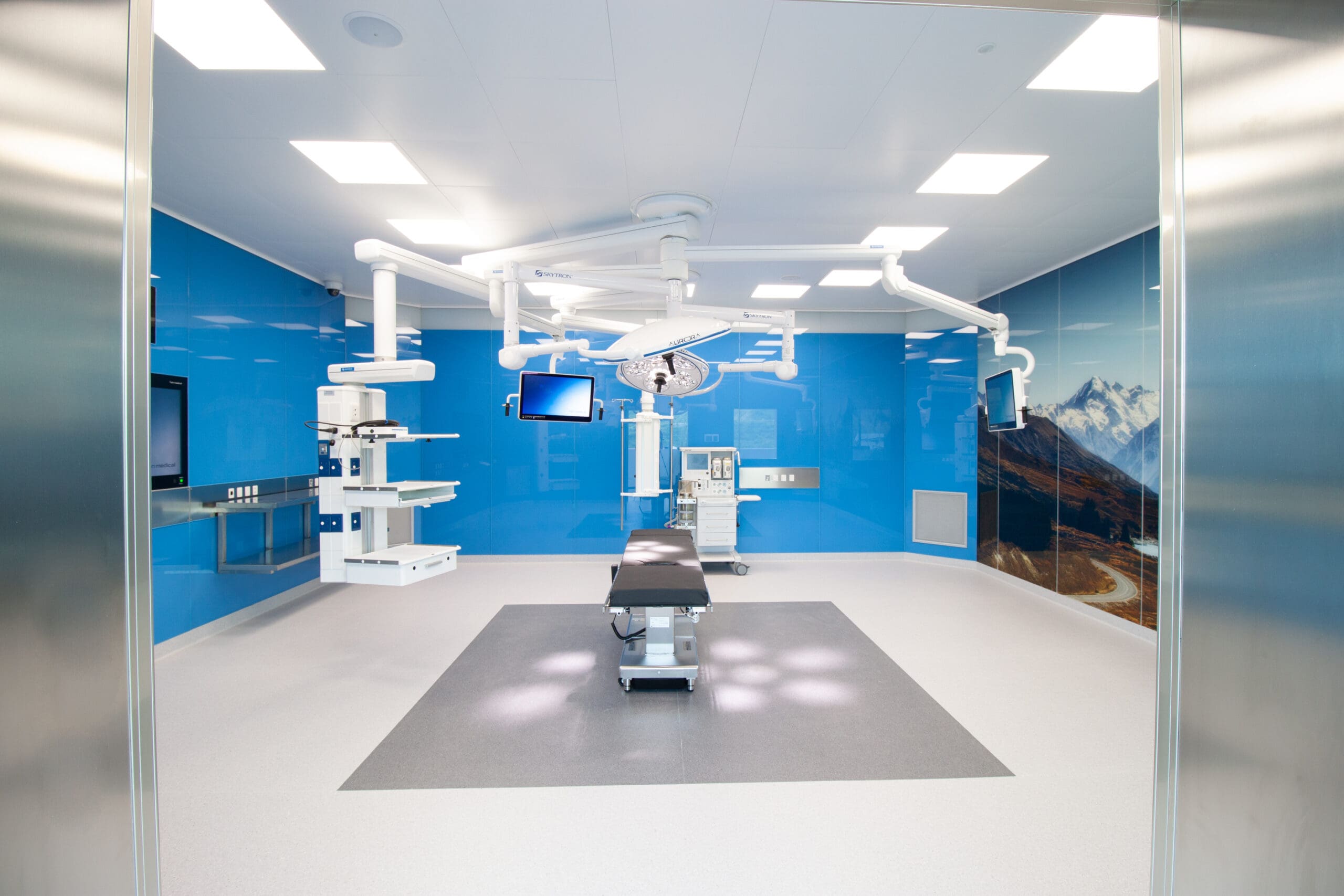
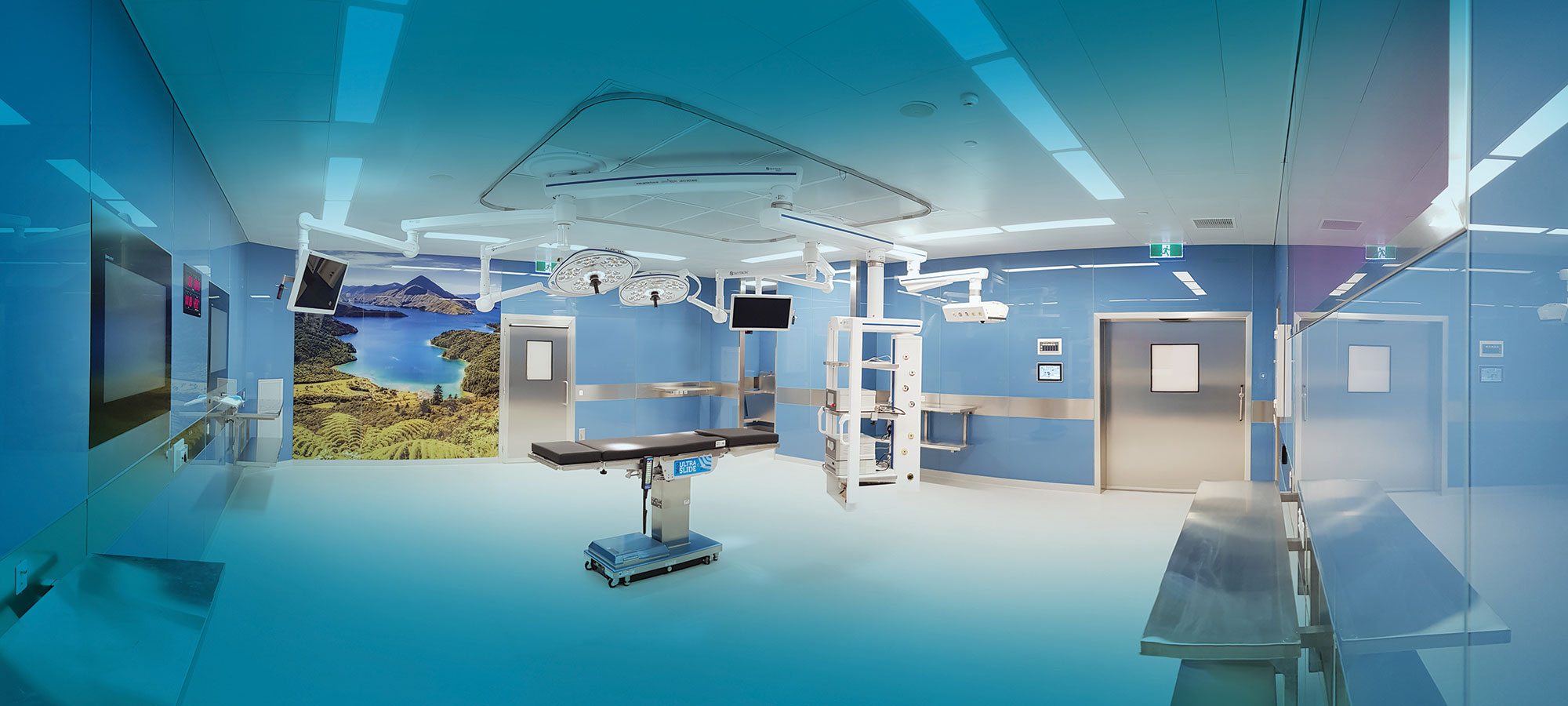
Modular is sometimes referred to as a “kit of parts”. It’s not a pre-fabricated pod that’s dropped in by crane. I often describe it as similar to buying a flat-pack product from Ikea: precision-engineered components manufactured off-site and assembled into a fully integrated, compliant operating theatre.
Unlike traditional construction methods where multiple trades build walls, ceilings and services sequentially, our modular operating theatres are designed as a complete system from day one.
Comparing construction methodologies
Traditional construction involves timber or steel framing, plasterboard and a vinyl finish, with multiple subtrades working around one another. While this method is familiar, it can be unpredictable. Weather, site conditions and coordination challenges often blow out project timelines. Disruption, dust and noise are impossible to avoid. For hospitals where operating time can be valued at up to $25,000 per day, lost time directly impacts revenue, patient flow and public perception.
By contrast, modular healthcare construction takes a system-based approach. Design is locked in early using Building Information Modelling (BIM) and 3D modelling, and components are manufactured under strict quality assurance conditions. Our prefabricated components are then assembled on-site, typically within three weeks and sometimes in just a matter of days.
Because we deliver a turnkey solution including walls, ceilings, pendants, HVAC, digital integration plus plumbing and electrical services, we eliminate many of the interface risks and trade bottlenecks that commonly delay traditional builds. Nothing needs to be plastered. Nothing needs time to cure. The result is a more predictable and controlled delivery process.
Why more hospitals are choosing modular
When I speak with hospital leaders, construction companies and architects, the challenges they face, and the appeal of modular theatres, are often the same.
Timeline certainty
We compress programme timeframes by weeks and sometimes months. Faster commissioning means earlier revenue generation, shorter waitlists and reduced exposure to penalty clauses. Most importantly, it means minimal disruption to business as usual. When we commit to a date, we deliver.
Cost control and return on investment (ROI)
With modular operating theatres, costs are defined and locked in early, significantly reducing variations and unexpected overruns. On-site labour is minimised, and coordination inefficiencies are removed. Over the life of our modular theatres, durable high pressure laminate (HPL), glass or stainless steel wall systems provide a lower total cost of ownership.
Operating theatres typically require major upgrades every 15 years, with technology upgrades needed far more frequently. In a traditional build, that means weeks of shutdown while walls are opened up and services are reconfigured. In our modular operating theatres, wall panels are easy to remove so cables and services can be accessed and upgraded quickly, often returning the theatre to full operation within a day or two. Less downtime directly benefits your ROI.
Flexibility and future proofing
Healthcare technology evolves rapidly, particularly when it comes to video integration and data systems. Our modular system is designed to accommodate that evolution thanks to removable wall panels. Services are accessible, upgrades are straightforward, and layouts can be customised. If your entire theatre needs to be moved somewhere else in future, up to 90% of materials can be recovered and repositioned, protecting your capital investment.
Compliance and risk management
Every theatre we design is developed to meet Australian and New Zealand standards, including Australasian Health Facility Guidelines (AusHFG) requirements and all applicable state-specific requirements, with full compliance achieved across every jurisdiction. Laminar airflow systems with High-Efficiency Particulate Air (HEPA) filtration, hermetic seals and antimicrobial surfaces support infection control and accreditation compliance. Early design lock-in reduces downstream risk, and having one integrated partner provides a single point of responsibility. That matters when hospital stakeholders are watching closely.
Clinical and workforce benefits
The environment clinicians work within, directly influences performance and retention. Clean walls with embedded antimicrobial properties, integrated lighting and pendants, and intuitive room control systems create workspaces that are both highly functional and aesthetically pleasing. These state-of-the-art operating theatres help attract and retain top surgical teams, support staff wellbeing and enhance patient outcomes by reducing stress levels and pre-op anxiety.
Modular construction is a strategic infrastructure decision
Modular healthcare construction is not simply an alternative building method. It is a strategic decision about risk, speed, value and long-term sustainability. For hospital leadership teams, architects, and builders who need to balance fiscal discipline, reform pressures and rising demand, modular operating theatres allow you to increase capacity with confidence.
If you are planning a theatre upgrade or expansion, I’d love to have a conversation with you. Cubro Opritech specialises in delivering compliant, future-ready surgical environments that protect your budget, your timelines and your reputation.
Let's build your next operating theatre with certainty.