I was sitting at the Victorian Infrastructure Delivery Authority’s Health Industry Forum at Marvel Stadium in Melbourne recently when I had a eureka moment.
We were talking about standardisation. Modular construction. How we can build hospitals faster, smarter and more efficiently. Then I listened to a quantity surveyor talking about project costs and something suddenly clicked.
A lot of people are measuring the wrong thing.
On any major hospital project, there is enormous pressure to control the construction budget. And rightly so. But if our focus stops at what something costs to build, we’re only looking at part of the picture.
Because the design and construction team eventually moves on. The hospital doesn’t.
It could be living with those decisions for the next 30 years.
What does it really cost?
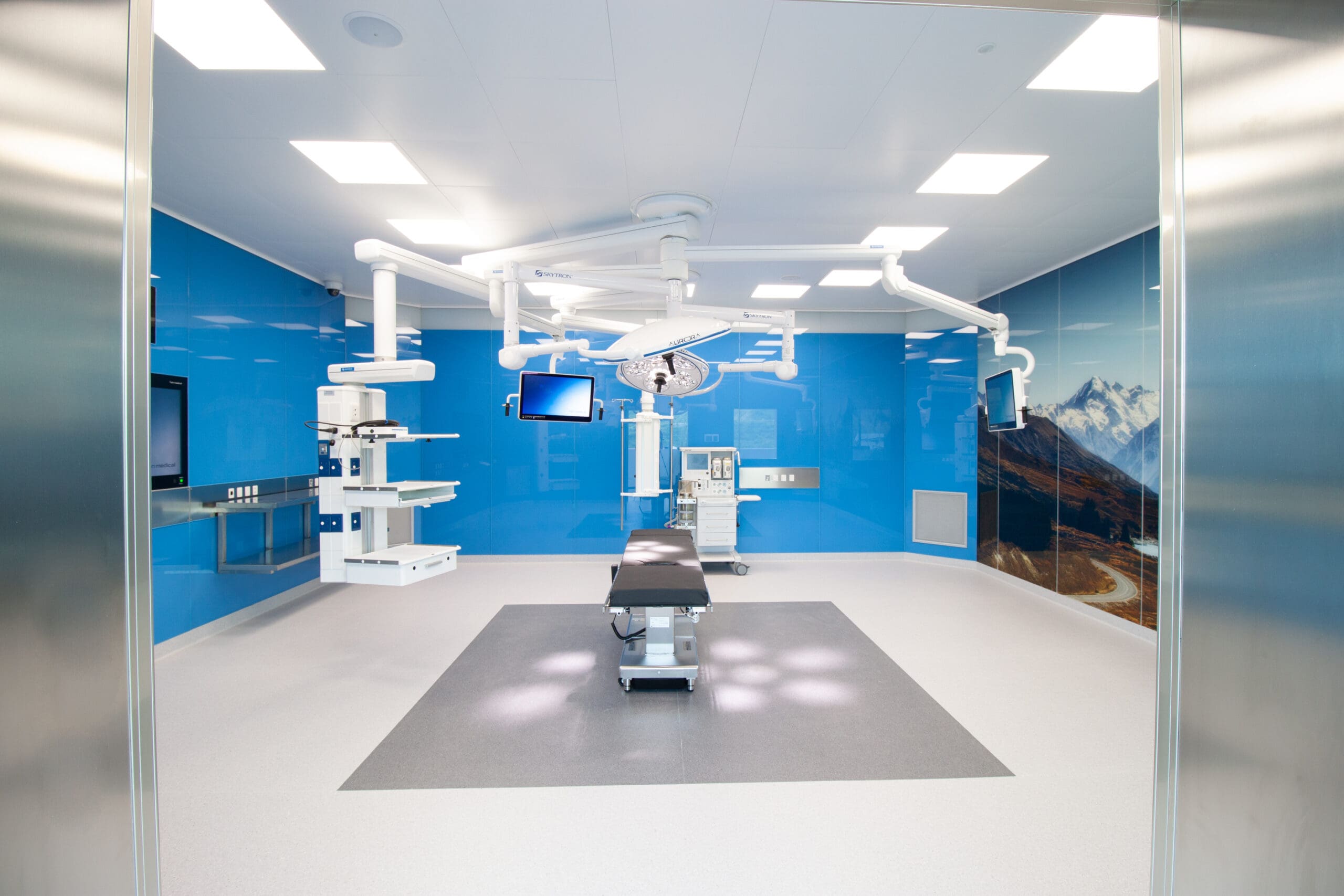
At Cubro Opritech®, we specialise in designing and delivering modular operating theatres and other complex clinical environments across Australia and New Zealand.
A modular operating theatre can look more expensive upfront. But that initial construction figure doesn’t tell you what the theatre will cost to own.
And when I talk about modular, I’m not talking about a prefabricated pod that’s built off site and dropped into place. Our modular theatres are more like a kit of parts – think of an IKEA flat pack. Precision-engineered components are manufactured off site, then assembled on site and adapted to suit the individual space and clinical requirements.
That flexibility matters when you start thinking beyond day one.
What happens when new technology needs to be installed? When services need maintenance? If walls are damaged? When the theatre needs a major refurbishment in 10 or 15 years?
And, crucially, how long will that theatre be out of action while the work takes place?
That’s where the numbers can start to look very different.
An operating theatre can generate around $25,000 a day in revenue. During a traditional refurbishment, a theatre may be out of service for up to 12 weeks depending on the scope of work. Based on a five-day operating week, that could mean around $1.5 million in lost revenue.
Suddenly, saving money on the original construction doesn’t look so advantageous.
Build for the next upgrade
Technology is moving incredibly quickly. Digital integration, imaging, robotics and data systems are constantly evolving. We don’t know what an operating theatre will need to accommodate 10 or 20 years from now. But we do know it will change.
That’s why accessibility is built into Cubro Opritech modular theatres from day one. Every wall and ceiling panel can be quickly and easily removed individually, giving teams direct access to cabling and services behind them. Once the work is finished, the panels simply pop back into place. There’s no need to rip open plasterboard walls, create dust and debris, then repair and repaint everything afterwards.
We’ve seen the difference this can make in practice.
At one regional New Zealand hospital, a modular theatre we installed eight years ago recently needed a complete digital integration upgrade, including new fibre-optic cabling, displays and computers. Work began after the surgical list finished on Thursday. The upgrade was completed on Friday, the ceiling was reinstated over the weekend, and the theatre was operating again on Monday morning.
That’s what whole-of-life value looks like.
Built to last – and built faster
Then there’s durability. Our glass wall systems are tough, durable and resistant to scratches and knocks. Unlike vinyl finishes, which may need replacing every five to 10 years, modular glass panels can remain in place for decades.¹
There’s another advantage. If you no longer need the theatre in that particular location, it doesn’t have to be demolished. A modular theatre can be dismantled and relocated, with up to 90% of the materials recovered and reused in the new location.²
And the financial benefits can begin long before that.
Because our modular components are manufactured off site and arrive ready to assemble, installation can take weeks rather than months. At King Street Private Hospital in Newcastle, for example, we installed four modular operating theatres in just six weeks – a programme that would traditionally have taken three to four months.³
For a hospital, opening sooner means treating patients sooner. For private providers, it also means the theatre can start generating revenue sooner.
That belongs in the cost equation too.
Start measuring what really matters
If we want healthcare infrastructure to become more efficient, more standardised and more adaptable, we need to look beyond the construction budget and consider what our decisions will cost over the next 20 or 30 years.
The cheapest option on day one won’t necessarily deliver the best value over the life of the theatre.
So perhaps the question shouldn’t simply be: What will this cost to build? It should be: What will this cost to own?
If you’re planning a new operating theatre or refurbishment, talk to Cubro Opritech about how a modular approach can reduce downtime, simplify future upgrades and deliver better value over the life of your investment.